

Master Your Money, Secure Your Future
Expert advice on personal finance, investing, and wealth building strategies tailored for India.
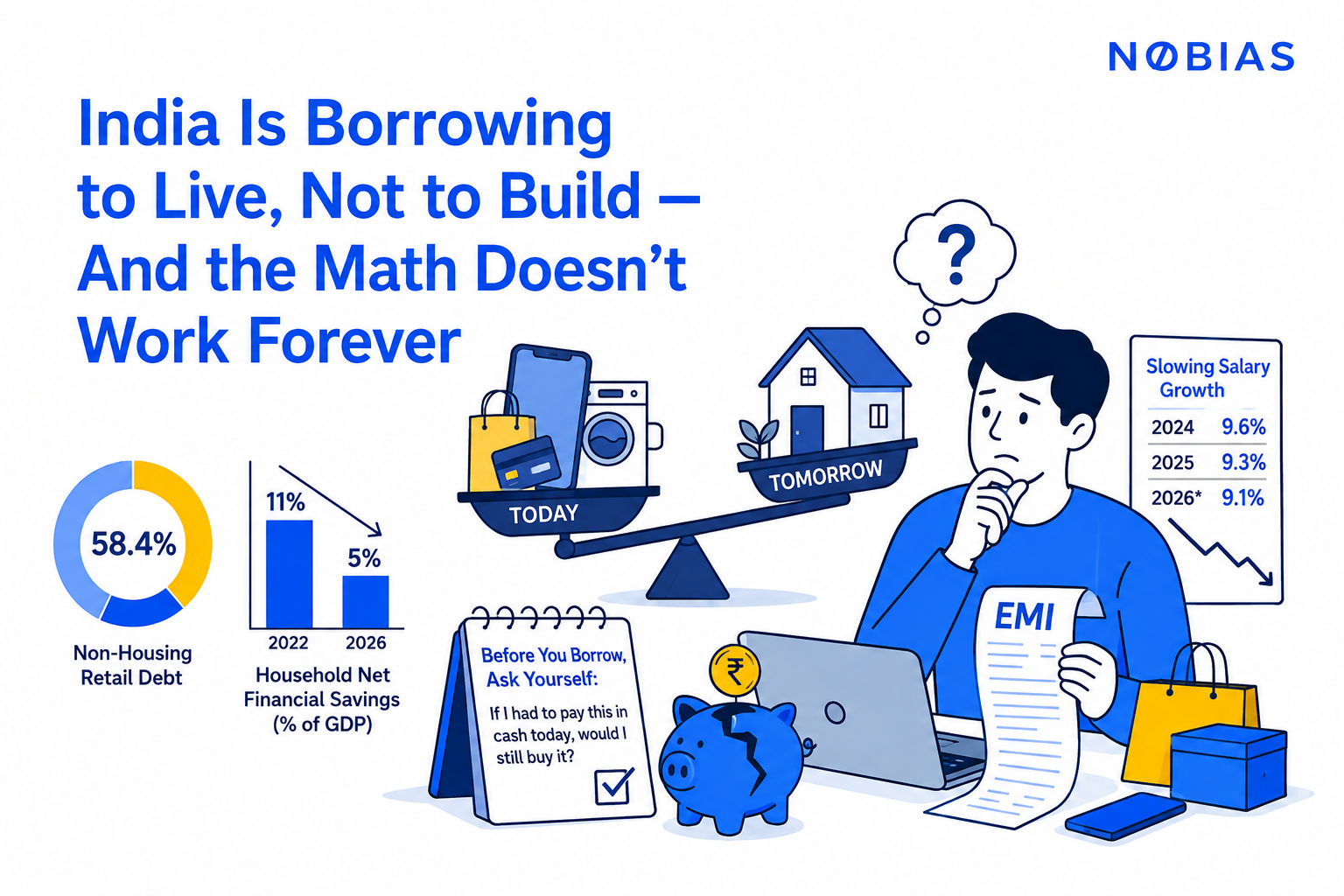
India Is Borrowing to Live, Not to Build — And the Math Doesn't Work Forever
Two numbers, sitting side by side, tell you almost everything about where Indian households are right now.
Household debt-to-GDP has hit a record 45.5%. At the same time, household net financial savings has fallen to around 5% of GDP — down from 11% just a few years ago, per the RBI's own tracking. India, historically one of the world's most savings-driven economies, is quietly swapping that identity for something closer to leveraged consumption. And the data on what that debt is actually going toward should make anyone paying attention sit up.

Money, Stress, and the Workplace: Why Financial Literacy Belongs in Your Wellness Strategy
Every year, conversations about workplace wellness circle back to the same blind spot: mental health programs, gym memberships, meditation apps — and almost nothing that addresses one of the biggest sources of stress employees actually carry into work every day. Money.
Only 27% of Indian adults are financially literate, according to the NCFE's 2019 Financial Literacy and Inclusion Survey — the most recent national benchmark of its kind. That's not a gap in a few unlucky households; it's the baseline for most of the workforce walking into offices across the country, including yours. And unlike the general wellness perks companies have gotten comfortable offering, financial stress doesn't stay contained to someone's personal life. It shows up in absenteeism, in disengagement, in the employee who's mentally somewhere else during a 3pm meeting because they're doing rent math in their head.
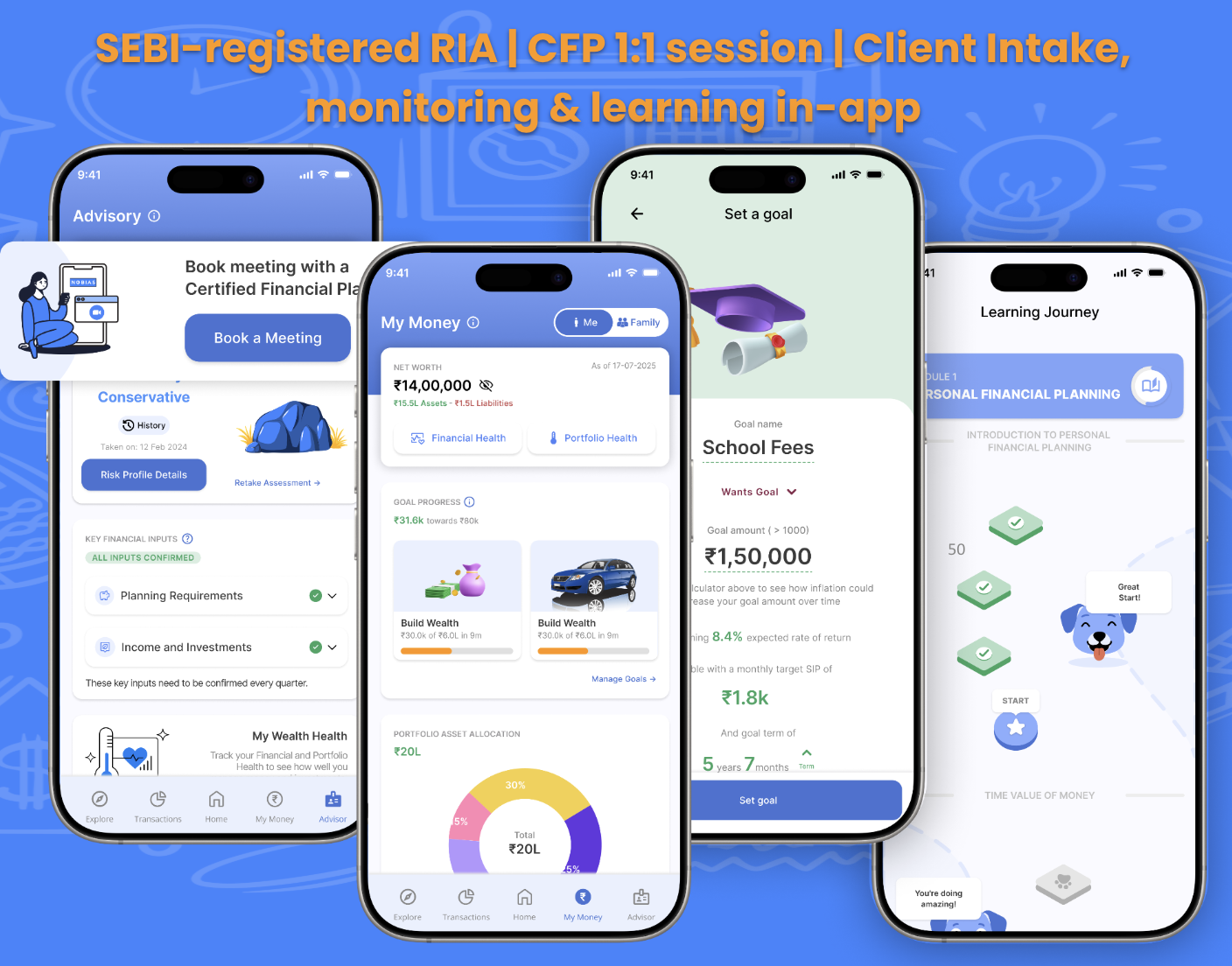
Nobias Artha Review 2026: Is It Worth It for Young Indians?
If you're a 25–35 year old professional in India, you've probably run into the same wall everyone your age runs into: you're earning real money for the first time, you know you should be doing something smarter with it than letting it sit in a savings account, and every "advisor" you talk to seems to be selling you something. A relationship manager at your bank. An uncle who's also an LIC agent. A YouTube channel sponsored by the very broker it's recommending.
Nobias is trying to be the alternative to all of that. Here's an honest look at where it stands, across the things that actually matter to someone in this age group deciding whether to trust it with their money.
Client, Customer, or User?
Google Maps is free. Satellites, data centers, engineers — none of that is free. So who's paying? Not you. You've never given Google a rupee for it.
That's because you're not the customer. You're the "user" — a nicer word for "the thing being sold" to whoever actually pays: advertisers.
You are not being served. You are being served up — Google's version of a drug user, lured in and kept hooked for free.
Client. Customer. User. Only one is legally required to put you first — and it's probably not the one you think.
Here's how to tell which one you actually are 👇
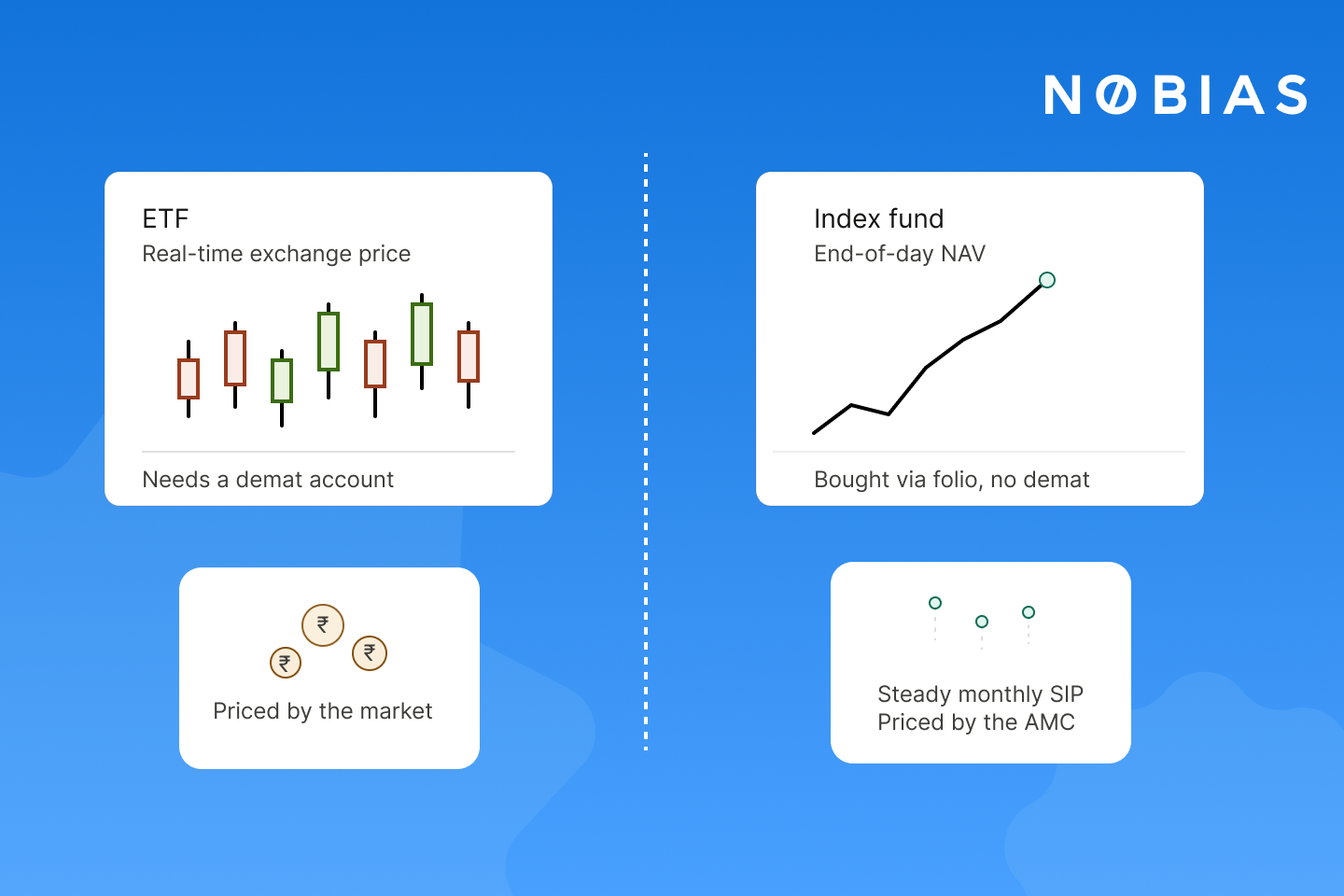
ETF vs Index Fund in India (2026): Why the Cheaper Option Often Costs You More
Passive investing has gone mainstream in India. Retail investors are done paying active fund managers roughly 1.5% a year for performance that frequently trails the index anyway, and the money is following that logic — passive AUM in the Indian mutual fund industry has crossed ₹10 lakh crore over the past five years, per AMFI data.
So most high-earners now agree they want Nifty 50 (or broader index) exposure as the core of their portfolio. The argument that's left is narrower: should that exposure sit in an ETF or an index fund?
The spreadsheet answer says ETF — lower expense ratio, case closed. The real-world answer, once you account for how Indian exchanges actually behave, is messier and usually points the other way for most people.
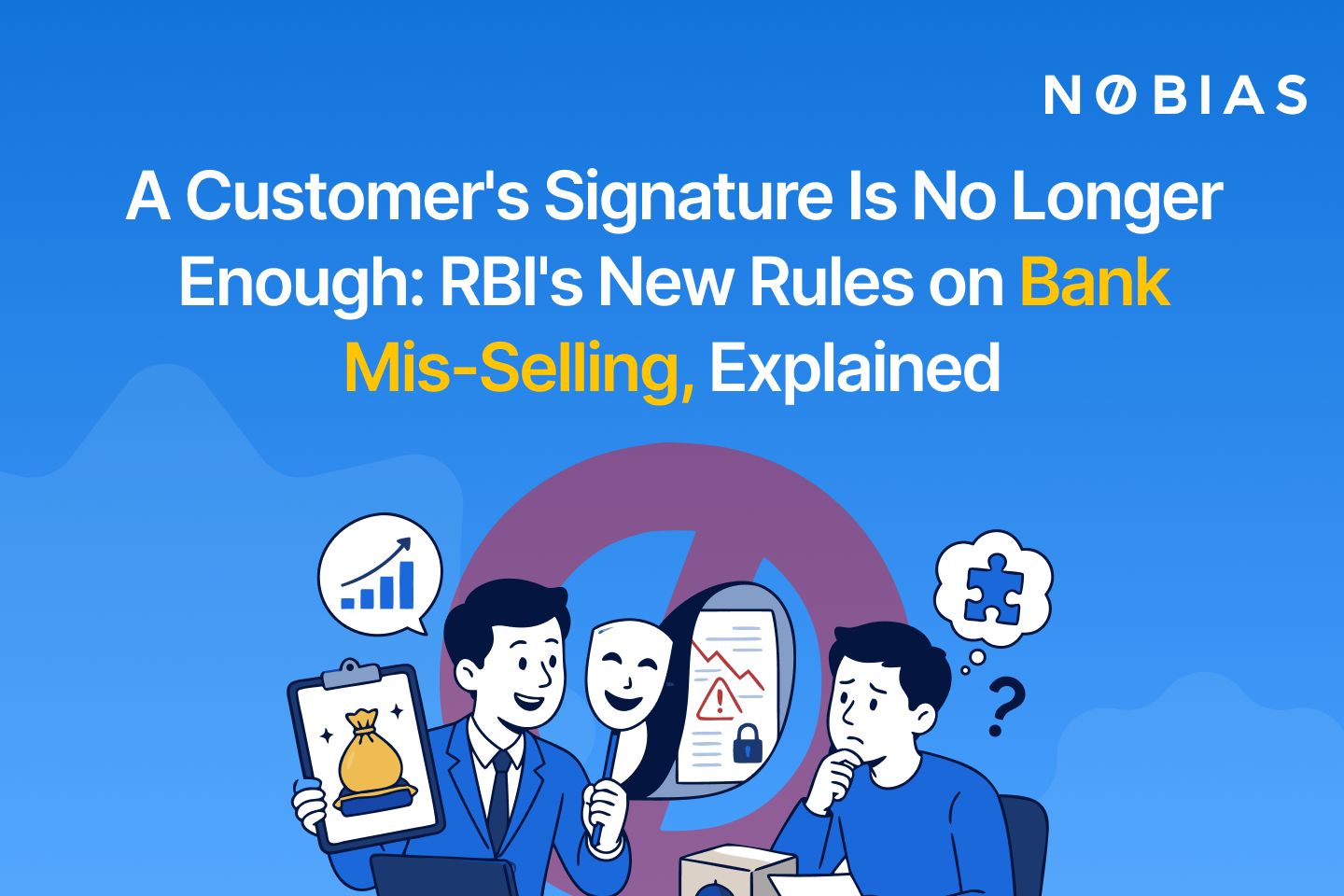
A Customer's Signature Is No Longer Enough: RBI's New Rules on Bank Mis-Selling, Explained
On June 15, 2026, the RBI issued comprehensive new directions governing how banks advertise, market, and sell financial products. Effective January 1, 2027, these rules apply to all commercial banks except Small Finance Banks, Payments Banks, Regional Rural Banks, and Local Area Banks.
This is not a minor compliance update. It is the most significant regulatory acknowledgement we have seen of a problem that fee-only advisors have been pointing to for years: that the way financial products are sold in India has been systematically designed to benefit the seller more than the buyer.
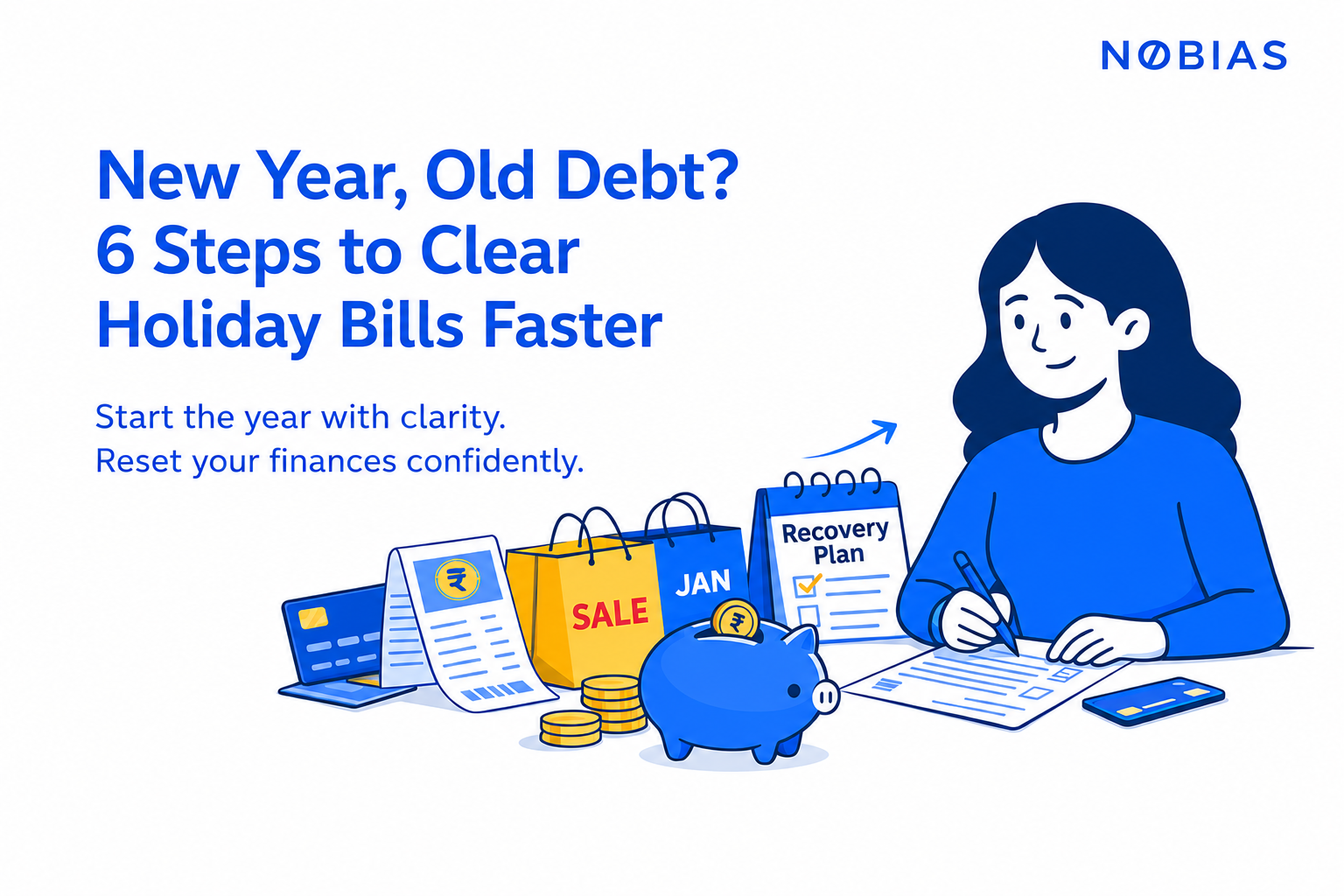
6 Practical Ways to Recover from Holiday Debt in the New Year
Diwali splurges, wedding season expenses, and year-end travel can quietly stretch your finances until January brings the bill. If your cash flow feels tighter than expected, you’re not alone. At Nobias, we believe debt recovery isn’t about guilt- it’s about clarity and strategy. With the right plan and disciplined action, you can reset, rebuild, and move forward financially stronger this year.

The Real Cost of Homeownership in Major Indian Cities
This article dives into real market data to compare the true cost of ownership versus renting, helping you make a financially informed choice based on flexibility, affordability, and long-term goals.

Financial Investment Advisor Firm Nobias Analyst India Pvt. Ltd. achieves ISO 27001 Certification
This article is an announcement of Nobias ISO 27001 certification.

6 Traits of Financially Healthy People
Being financially healthy is about more than just having money; it’s about having control over your finances and making smart financial decisions. Financially healthy people tend to share these six traits:

Understanding Life Insurance Solutions: HLV vs. Needs-Based Approach
In today’s financial landscape, life insurance is more than just a safety net; it’s an essential component of a comprehensive financial plan and life. At Nobias, we understand that every individual has unique needs and preferences when it comes to securing their financial future. That's why we offer life insurance solutions that cater to both the Human Life Value (HLV) and Needs-Based approaches. This blog will delve into these two methods, providing insights and examples to help you make an informed decision.

7 Simple Money Saving Steps
Managing your money doesn’t have to be complicated. At Nobias, we believe that everyone deserves access to simple, unbiased and effective financial tools to secure their future. Saving money is the first step toward achieving your dreams, whether it’s buying your first home, starting a business, or building a nest egg for retirement. Let’s explore how you can budget better, set smart goals, and invest wisely—all without unnecessary fees.

Are ULIPs as good as advertised?
Life insurance is one of the most important steps to ensure your family’s financial security. But choosing the right plan can be overwhelming. Unfortunately due to conflicts of interest by most financial providers you do not always know everything you need to know about a product to make the right decision. ULIPs is one such product.

4 step guide to select a Health Insurance Cover and Policy
Health insurance is one of the most important financial decisions you can make. The right cover can shield you from unexpected medical expenses while ensuring you get the best possible care. But with so many options available, choosing the right policy can feel overwhelming

3 step guide to select Term Life Insurance Policy
Life is full of uncertainties, and while we can't predict the future, we can certainly plan for it. Life insurance serves as a financial safety net, providing monetary support to your dependents in the unfortunate event of your demise. It ensures that your family's financial needs are met, debts are covered, and long-term goals are not compromised, even when you're no longer around to provide for them.

NISM: Life Insurance: Securing Your Family's Financial Future
Life is full of uncertainties, and while we can't predict the future, we can certainly plan for it. Life insurance serves as a financial safety net, providing monetary support to your dependents in the unfortunate event of your demise. It ensures that your family's financial needs are met, debts are covered, and long-term goals are not compromised, even when you're no longer around to provide for them.

Account Aggregators FAQs
An Account Aggregator is a financial service platform that consolidates financial information from various sources like banks, insurance companies, investment firms, and other financial institutions approved by RBI, Sahamati. It provides a unified view of a user's financial data, making it easier to manage and analyze financial assets and liabilities.

A Beginner's Guide to Financial Independence, Retire Early (FIRE)
Have you ever felt the weight of financial worries holding you back from living your best life? It's a common feeling, but it doesn't have to be your reality. Being financially responsible means taking control of your money so that it works for you, not against you.

A Simple Financial Plan: Best Practices
Here we look at a simple Financial Plan for the next 25 years following best Practices of (1) The 50-30-20 rule (2) 3 month Emergency Fund and (3) Invest 90% of your “financial future” funds in a Nifty 50 low cost index fund and invest 10% in 10 stocks while you improve your financial literacy and knowledge.
NISM: Review your investments
Importance of Review: There could be a change in the goal, the markets may behave in an uncertain manner, the portfolio may outperform or underperform the broad market, or the investor may change the portfolio or even the structure of regular expenses, impacting one’s ability to save. Considering all these possibilities, it is critical that the investment plans be reviewed.